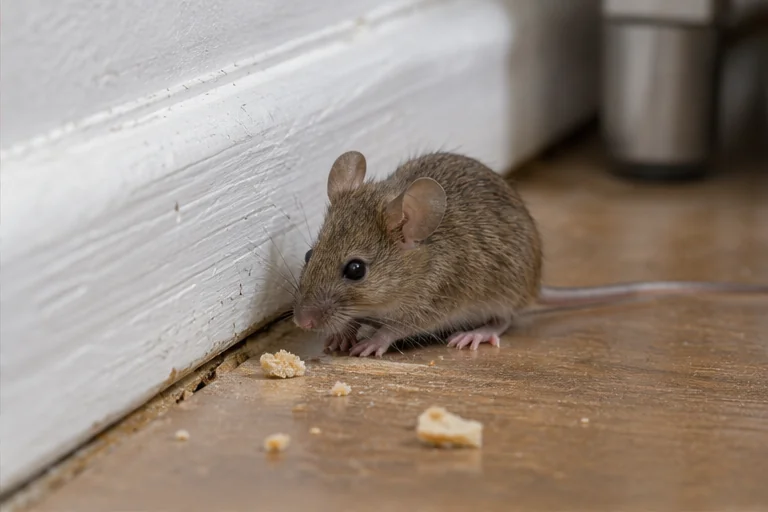
House mice can enter through surprisingly small openings and settle close to warmth and accessible food. Activity may continue unnoticed behind kitchen units, in cupboards, lofts and service voids.
Before treatment
What an assessment involves
An inspection considers food storage, droppings distribution, potential nesting areas and gaps around pipes, doors and building fabric. We explain how the evidence helps distinguish mice from rats and what access is needed before treatment.
Spot the evidence
Signs to look for
These signs can indicate a problem, but not every sign is conclusive. A proper identification helps determine the next step.
- Small, pointed droppings in cupboards or along wall edges.
- Fine scratching sounds, especially when a building is quiet.
- Gnawed food packaging and damaged stored materials.
- Nesting material or a persistent stale odour in enclosed areas.
Reduce recurrence
Practical prevention
- Store cereals and pet food in sealed containers.
- Clean behind appliances and reduce crumbs or spills.
- Check plumbing penetrations, door thresholds and damaged vents.
- Remove clutter that provides undisturbed nesting space.
A measured response
How professional control is approached
The response may include professionally placed controls, activity monitoring, cleaning guidance and a prioritised proofing plan. Placement and any products used are selected for the particular property, considering children, pets and other occupants.
Common questions
Mouse Control FAQs
Can mice live inside walls?
Yes. Service voids and cavities can provide hidden routes. Inspection helps identify likely access points.
Do mice mean a house is dirty?
No. They can enter clean properties wherever shelter and access exist.
Will blocking holes alone solve it?
Proofing is important, but an active infestation usually needs a coordinated assessment and control plan.
Need an assessment?
Tell us what you have noticed.
Describe the activity and location so we can advise on the next practical step.