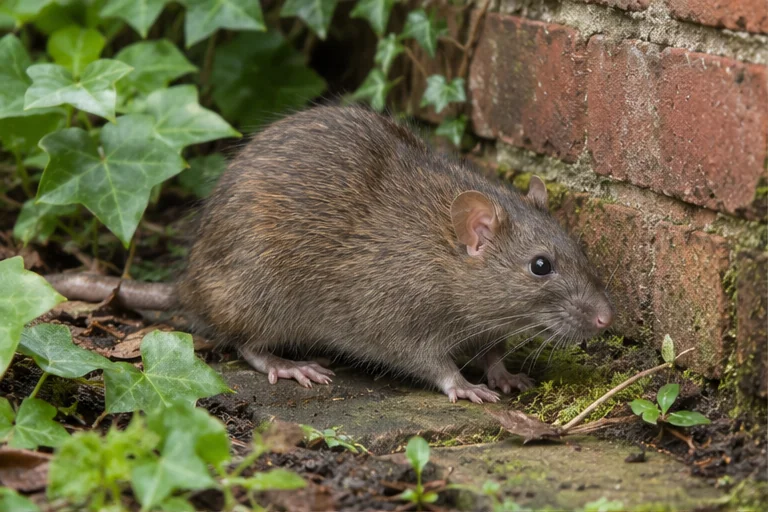
Rats can use drains, damaged air bricks, gaps around pipes and sheltered outdoor areas to reach buildings. Seeing one rat does not reveal the size of the problem: identification and a proper inspection come first.
Spot the evidence
Signs to look for
These signs can indicate a problem, but not every sign is conclusive. A proper identification helps determine the next step.
- Dark, spindle-shaped droppings, often in sheltered routes or storage areas.
- Scratching or movement beneath floors, in walls or in loft spaces.
- Gnawing on packaging, timber or service penetrations.
- Burrows, greasy rub marks, disturbed bins or repeated sightings.
Before treatment
What an assessment involves
We discuss where and when activity occurs, inspect accessible entry points and harbourage, and look at food sources, structural gaps and any risks to people, pets or non-target wildlife. Where drains are suspected, further investigation may be recommended.
A measured response
How professional control is approached
The appropriate control method depends on the site, severity, access and legal constraints. A plan may combine targeted control, monitoring, sanitation advice and recommendations for proofing. Follow-up may be needed to check whether activity has reduced and whether entry points remain.
Reduce recurrence
Practical prevention
- Keep food waste secured and address spilled bird feed.
- Remove easily accessible shelter and manage overgrown edges.
- Repair damaged vents and seal suitable gaps using rodent-resistant materials.
- Investigate recurring activity rather than relying on a short-lived treatment alone.
Common questions
Rat Control FAQs
Will one visit solve a rat problem?
Not necessarily. The site, route of entry and level of activity determine whether monitoring or further visits are appropriate.
Do you treat rats in gardens?
We can assess garden activity and advise on suitable options, including conditions attracting rats from nearby areas.
Is rat poison always used?
No. Control methods are selected following assessment and must account for safety and wildlife risks.
Need an assessment?
Tell us what you have noticed.
Describe the activity and location so we can advise on the next practical step.